
EXPERT GUIDE · AUDIENCE & STARTING SKILLS
Who Is My Course For, and What Should Learners Know Before They Start?
Name the learner, the task and the starting ability the course assumes. Then check where the course needs to teach more—or describe its audience more clearly.
For experts shaping a continuing-education course
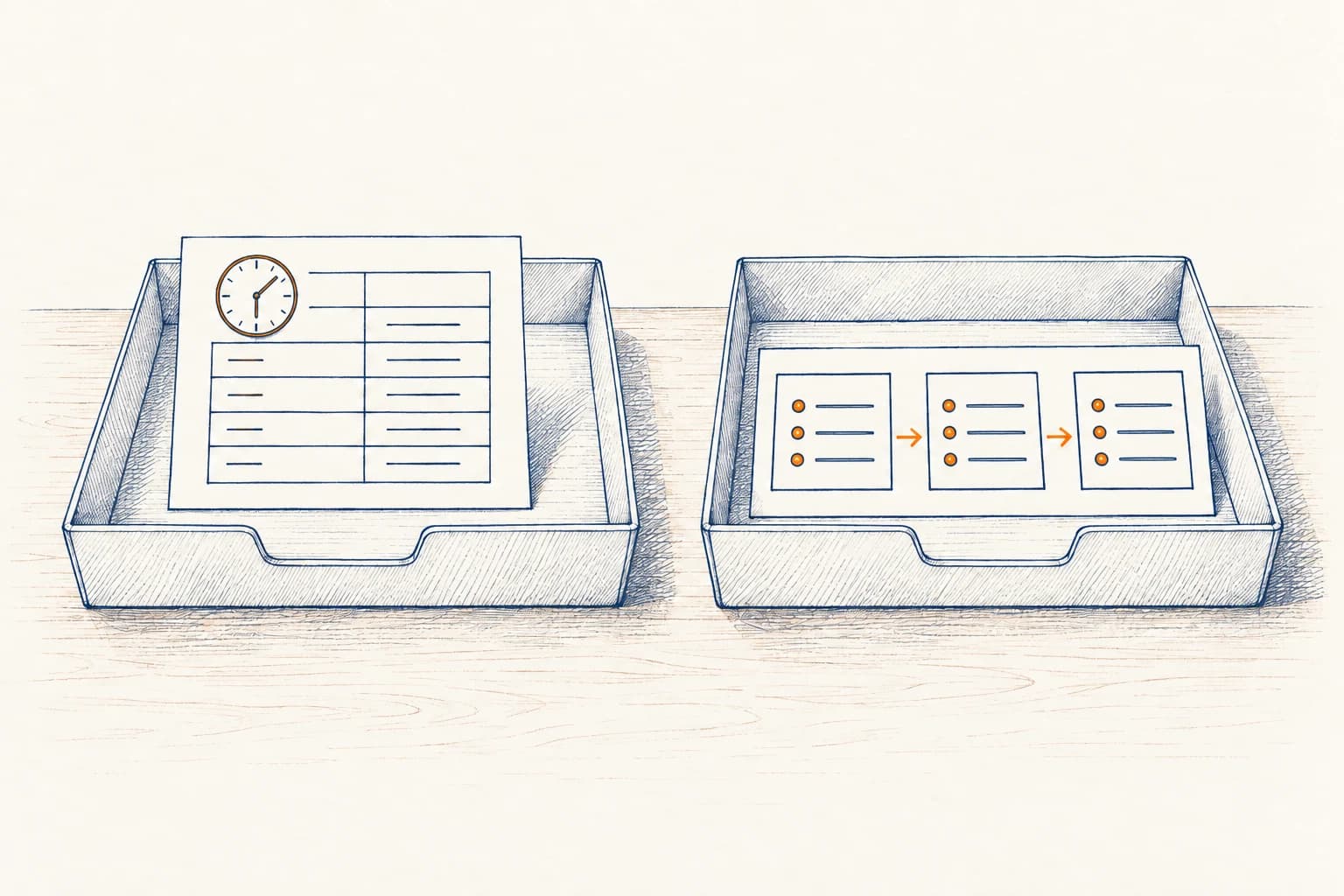
A course can be clear about its subject and still be unclear about its learner. “For beginners” leaves an important question open: beginners at what? Someone may be new to organizing an event while already comfortable reading a schedule.
Start by distinguishing the work the course will teach from the background it expects. The example and planning record below are editorial suggestions for preparing that conversation; they are not an admissions test or a required SkillShiftEd form.

01 · THE STARTING PERSON
Name the learner and the task.
Describe a person doing a particular kind of work. “Anyone interested in events” is a broad audience label. A more useful planning statement names the role, the situation and the action the course addresses.
Carnegie Mellon’s Eberly Center recommends considering who students are and the knowledge they bring when designing a course. That supports making background assumptions explicit; it does not set an entry rule for your program.
Imagine a course for volunteer event coordinators preparing a simple run-of-show. Learners receive a set of activities and timing information, then arrange them into a usable sequence. This is an invented administrative example, with no real venue, learner result or institutional policy behind it.
- LearnerA volunteer event coordinator.
- SituationPreparing the order of activities for a small event.
- Taught actionArrange supplied activities and timing information into a usable run-of-show.

02 · TWO DIFFERENT DECISIONS
Separate what learners bring from what they learn.
For the fictional course, reading a time-and-duration table is a candidate starting ability. Arranging activities into a usable sequence is the skill the course intends to teach. Putting both in one broad label—“event planning”—would hide the distinction.
Ask why each assumed ability matters for the first activity. If the exercise uses a time table before explaining how to read one, familiarity with that format has become an assumption in the lesson, whether or not the description mentions it.
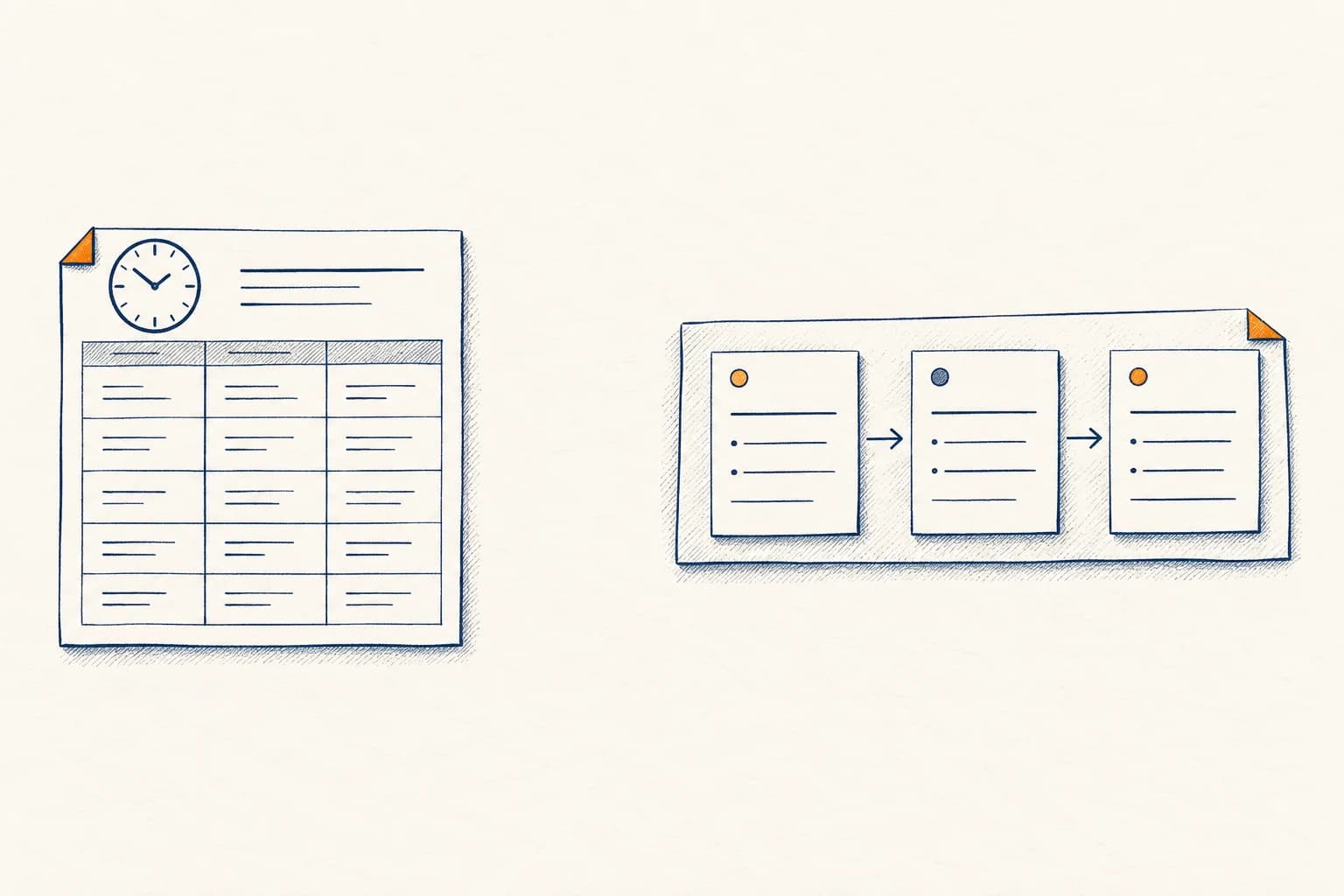
- Bring at entry — assumption to checkRead the time-and-duration table used in the exercise.
- Learn here — intended course skillUse the supplied information to arrange activities into a sequence.
This is one part of deciding what makes a course college-ready. The broader preparation includes a clear purpose, complete materials and an institution’s own review requirements.

03 · LOOK FOR THE MISSING INFORMATION
Check an assumption before treating it as a requirement.
Carnegie Mellon distinguishes direct checks of prior knowledge from indirect information. A task can show what someone does with material; a self-report describes their own view or experience. The two kinds of information answer different questions.
- Indirect informationAsk whether intended learners have used a run-of-show or a time-and-duration table before. Keep the answer as reported experience.
- A possible direct checkShow the kind of table used in the fictional lesson and ask the learner to locate an activity’s start time and duration. Look at the work they produce.
A response to that small task would concern that table-reading task. It would not prove broad readiness for the whole course. Likewise, confidence in a self-rating is not a demonstration of the skill.
This is an illustrative design option. It establishes no pass score, required pre-test or rule excluding a learner. Choose an appropriate way to examine the assumption with the actual course team and institutional context.
04 · A DESIGN CHOICE TO MAKE
Resolve the mismatch in “for beginners.”
Now suppose the fictional description says “for beginners,” but the first activity assumes learners already understand a run-of-show. The mismatch needs a decision. Simply leaving both statements in place would leave the expected starting point unclear.
Two possible responses are to teach the missing convention or to describe the expected experience more precisely. These are options to discuss after checking the intended audience. Neither has been selected in this example.
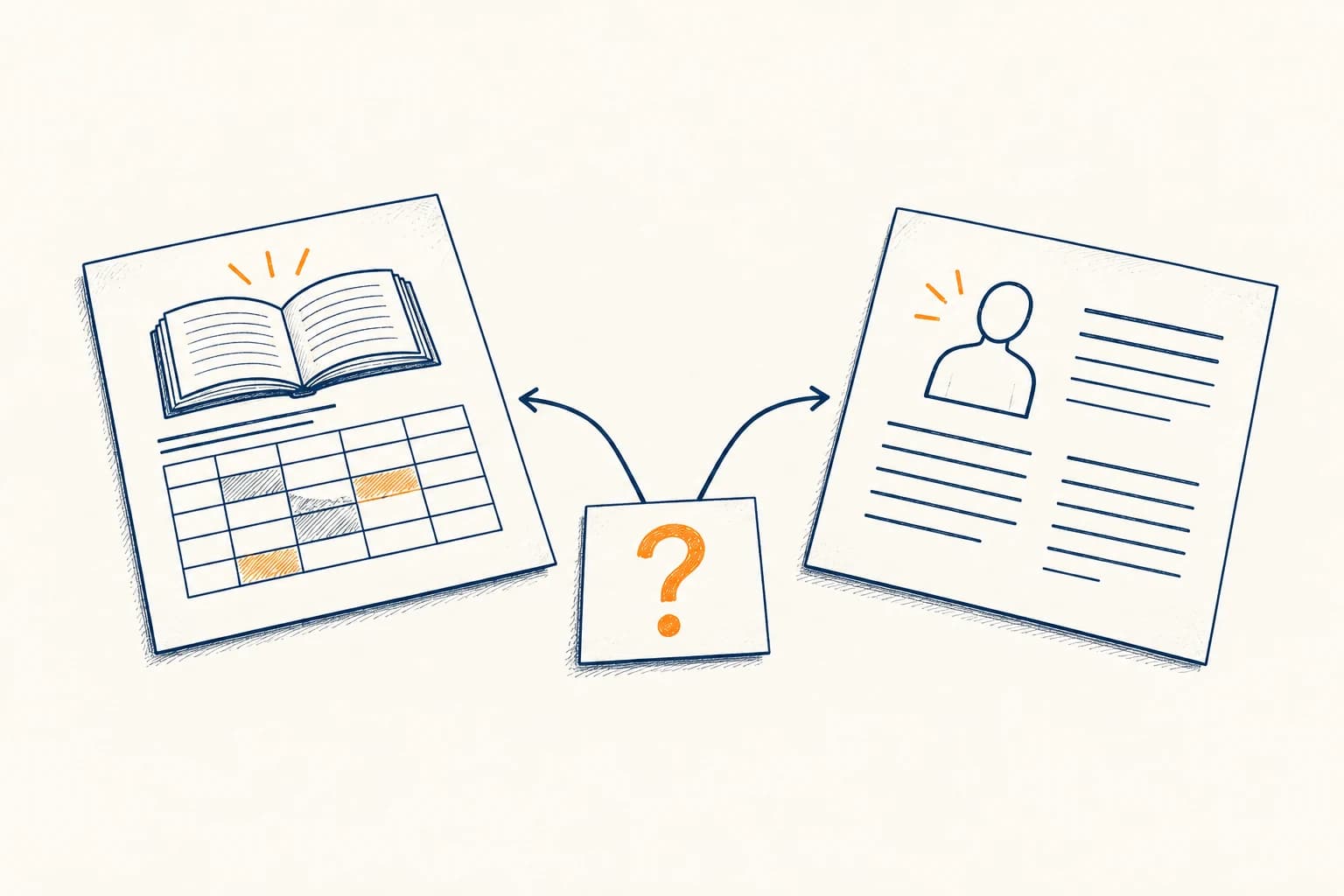
- Option to consider: teach itInclude an introduction to the table or run-of-show convention before learners need it.
- Option to consider: describe itState the starting experience the course actually expects, then confirm that expectation in its context.
Once that choice is clear, it can inform adapting the material you already have. The example ends with the choice open; it does not claim that a revision has been tested or that learners have succeeded.

05 · A SHORT PLANNING RECORD
Keep the assumption and the open question together.
We recommend a compact record that separates the intended learning from the information still needed. Use the same learner and task throughout so another person can see why the starting assumption matters.
- Intended learner
- Volunteer event coordinators.
- Intended action
- Arrange supplied activities and timing information into a simple run-of-show.
- Assumed starting ability
- Read a time-and-duration table.
- Why it matters
- The first exercise uses that format before explaining it.
- How the assumption could be checked
- Ask about prior experience and consider a short task using the relevant table.
- Support or scope question
- Should the course introduce the convention, or should its description state a clearer starting expectation? Decision pending.
This is an editorial preparation tool. It is not proof of readiness or an institutional intake requirement. Replace the invented details with verified information about the actual course before using such a record.

06 · KEEP THE BOUNDARY CLEAR
Confirm the actual institutional context.
A useful course-design question does not establish a college’s admissions policy. SkillShiftEd’s published guidance leaves institutional requirements and approval decisions with each institution. Confirm what applies to the specific offering.
- Expected backgroundWhat knowledge or experience does this course actually assume?
- Program and delivery contextWhat type of offering is proposed, and how will learners encounter the first activity?
- Actual entry requirementsHas the institution specified any requirements, and where are they recorded?
- Responsibility for the answerWho can confirm the requirement or decide how the course should address a gap?
Do not supply a degree requirement, test or prerequisite simply because another program uses one. For the broader materials discussion, see what a reviewable course packet can include.

07 · THE NEXT PREPARATION STEP
Bring one clear learner and one open assumption.
For a fit conversation, bring the learner you intend to help, one action the course would teach and one starting assumption you still need to check. That gives the discussion a concrete place to begin without pretending every design choice is settled.
Name the learner. Name the taught action. Keep the unanswered background question beside them.
See who SkillShiftEd works with
08 · QUESTIONS & ANSWERS
A few practical questions.
Does a beginner course mean learners need no prior knowledge?
The word “beginner” does not identify every starting skill. State what learners are new to and examine the background the first activities assume. Confirm any actual entry requirements in the program’s institutional context.
What is the difference between an entry skill and a skill taught in the course?
An entry skill is something the course expects learners to bring; a taught skill is something it intends to develop. In our fictional example, table reading is an assumption to check, while arranging supplied activities is the intended learning.
Can a self-rating show that someone has the starting skills?
A self-rating is indirect information about a person’s view of their ability. It is different from observing them perform the relevant task, and it does not by itself demonstrate competence.
What can I do if the first activity assumes too much background?
Consider whether to introduce the missing knowledge or clarify the expected starting experience. Choose in light of the actual audience and course context. The options in this article are recommendations, not a required procedure.
Who decides the prerequisites for a particular program?
Confirm the requirements and decision owner with the institution and the people responsible for the actual offering. This planning exercise does not give SkillShiftEd or an individual expert admissions authority.