

“College-ready” does not mean accredited, approved, or finished to one universal standard. It means your course is prepared so an institution can review it under its own requirements.
You can make that preparation concrete. Choose one thing a learner should be able to do, show how you would teach it, and include a task that lets someone examine the learner’s work. Then check what the intended institution asks to review. This guide expands on how SkillShiftEd uses college-ready and shows what the work can look like before a full program is ready to teach.
01

What should a course reviewer be able to understand?
A useful preparation packet tells a connected story: who the course serves, what those learners will practice, and how their work will be checked. We recommend gathering the following pieces for a first review conversation. This is SkillShiftEd’s preparation advice, not a form every college uses.
- The learner and the needName the intended audience, what they already know, and the task or problem the course addresses.
- The intended outcomesDescribe work the learner should be able to do, using specific actions.
- The learning pathOutline the explanations, examples, and practice that support those outcomes.
- A sample of learner workInclude a task and the criteria you would use to review it.
- The supporting materialGather relevant experience, source references, permissions information, and questions that still need an answer.
Keep open questions visible. A missing practice task or an unresolved delivery requirement is useful information for a review conversation. Labeling the gap gives the team something specific to work on.
02

How does a broad topic become a teachable outcome?
Consider “project communication.” It names a subject, but leaves the learner’s work unclear. For this original, fictional teaching example, narrow the audience to new project coordinators and the task to writing a short status note.
- Draft outcome: Given a project update, identify unresolved decisions and write a status note that separates confirmed facts from open questions.
- Teaching: Show a source update and explain how to distinguish a reported fact from an assumption. Walk through why a pending decision belongs in an open-questions section.
- Practice: Give the learner an imperfect status note to mark up. Ask them to identify unsupported statements, then revise the note using only the supplied update.
- Check: Review the revised note against three criteria: every factual statement can be traced to the update; unresolved decisions are labeled; and no missing detail has been invented.
Here is the small example inside that task. The fictional source update says: “The draft is complete. The review meeting has not been scheduled.” The imperfect note says: “The draft is approved. The review meeting is confirmed.” A supported revision would say: “The draft is complete. Approval is not confirmed in the update. The review meeting still needs to be scheduled.”
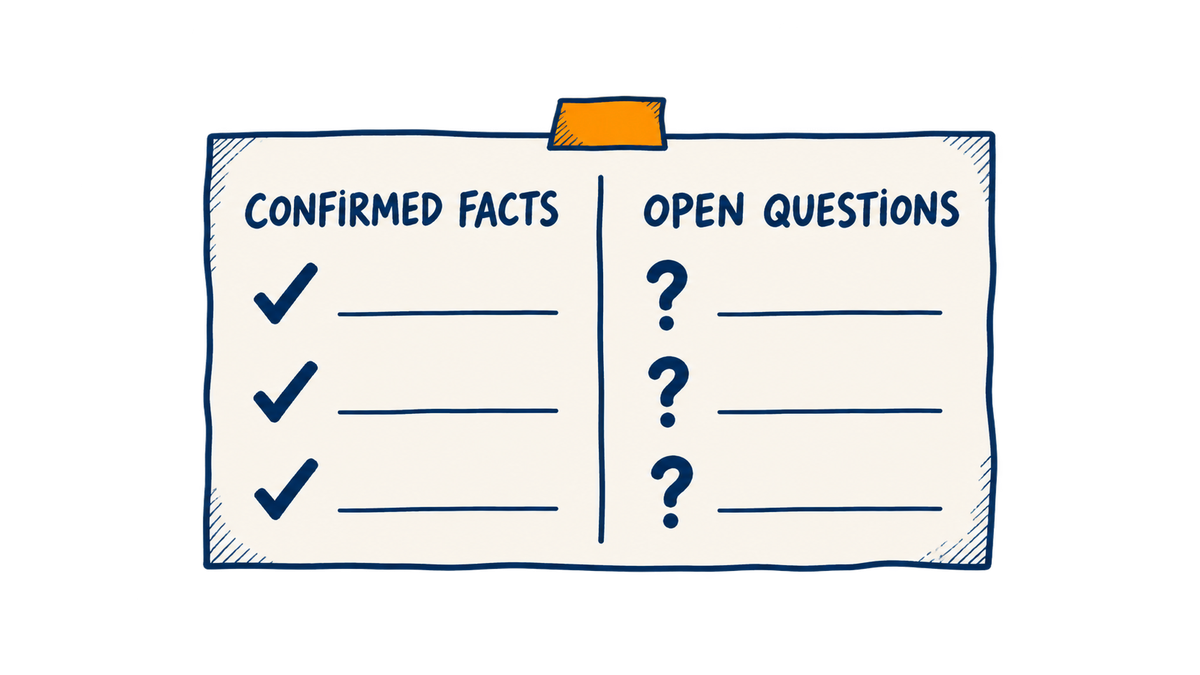
The learner now has something to do, and the reviewer has visible work to examine. This is an illustration of course design, not a report of a real learner’s results.
Quality Matters describes alignment among objectives, assessment, materials, activities, and technology in its Higher Education Rubric. The example applies that design idea in plain terms. It does not represent a Quality Matters review or certification.
03
Can existing notes, workshops, recordings, or a book help?
Yes. SkillShiftEd’s published process allows the conversation to start with material you already have, including a course, workshop, book, notes, recordings, or a strong idea. That starting point is different from the package a particular college may require later.
For each useful item, make a short note: what it helps teach, which example or activity it could support, where it came from, and what needs checking. An experienced consultant’s workshop story might become a fictional practice scenario. A chapter might supply an explanation that needs a separate learner task.
Review sources, claims, permissions, and sensitive details before planning to reuse material. Recording those questions is preparation; it is not a determination that every item is cleared for use.
If you are still deciding what to bring, the guide to what you can start with explains how an idea or existing material can begin the conversation.
04

Do all colleges ask for the same things?
The public pages below show different institutional requests. They are examples from the named institutions, not a universal checklist or evidence of a SkillShiftEd partnership.
- Cabrillo College Extension identifies course content, instructor qualifications, and marketability as broad areas of review in its Teaching with Extension section. Its separate Corporate Training section has its own qualification language; those details should not be applied to every Extension proposal.
- Central Oregon Community College’s Community Education proposal asks for learning outcomes, the target audience, delivery method, community need, and how a course would complement current offerings. It also asks about the instructor’s qualifications and teaching experience.
- Central Washington University’s continuing-education proposal page lists a proposal form, a resume or CV, and an instructor-handbook acknowledgment. The page separately describes participant evaluations at the end of a course. Those later delivery responsibilities should not be confused with documents available at the proposal stage.

Use each institution’s current instructions for the program type you are considering. A useful preparation question is: which parts of our packet answer this institution’s questions, and which parts still need work?
05
What makes the materials easier to use?
Write directions that tell the learner what to use, what to do, what to produce, and how the work will be reviewed. Use meaningful headings and link labels. Plan appropriate captions and transcripts when using recorded media.
For images, choose the text alternative according to the image’s purpose. A diagram carrying an instructional point needs that meaning available in text; purely decorative art can be handled differently.
These recommendations draw on W3C’s writing guidance and images tutorial. They are starting checks, not proof that a course meets every accessibility requirement. Confirm the intended institution’s requirements for materials and delivery.
06

Who prepares the course, and who makes the decision?
SkillShiftEd’s process describes the expert contributing subject knowledge while the team helps shape the curriculum and coordinates production, branding, and submission. The institution controls its own review and approval decisions. Catalog timing and enrollment are not guaranteed.
For the preparation work, we recommend naming who will check subject accuracy, who will review the learner task, and who will resolve each open question. Agree the work involved for the particular program. You can read how the development process works for the broader sequence.

07

Questions experts ask
Does college-ready mean accredited?+
No. In SkillShiftEd’s usage, it describes preparation for institutional review. It does not confer accreditation or promise a college’s approval.
Can I start with an idea or course outline?+
Yes. A strong idea or existing material can begin the conversation. What a college needs later depends on its requirements and the review stage. For preparation, SkillShiftEd recommends adding a sample learner task, criteria for checking it, and open questions to the outline.
Do I need the same credentials at every college?+
Check the requirements for the particular institution, subject, and program type. The cited public pages describe their own expectations; none establishes a universal qualification rule.
Does the learner check have to be a quiz?+
For the status-note example, a written task lets a reviewer examine the intended skill directly. Choose a check suited to the outcome, then confirm any assessment requirements with the institution.
Can a well-prepared packet guarantee placement?+
No. Preparation makes the course and its supporting material available for review. The institution retains its decision.
START WITH WHAT YOU HAVE
Show us what you want to help someone do.
Bring your subject, your relevant experience, and the material or idea you have now. Answer 11 focused questions, then share a short bio and working course outline. No obligation.
Start a program review