
EXPERT GUIDE · WORKING TOGETHER
How Does the SkillShiftEd Partnership Work, Step by Step?
Bring your expertise and the material you have. Here is how the published process moves through development, preparation, and college review—and what you should clarify along the way.

SkillShiftEd’s published process has four broad phases: explore your expertise, develop the program, prepare it for publishing, and work toward college distribution.
You contribute subject knowledge, material, and review effort. SkillShiftEd describes support with structure, instructional design, production, publishing preparation, and distribution. The agreed work depends on the project; college partners make their own decisions about review and placement.
This guide explains the published process and offers preparation questions. It does not set a project schedule or establish a development commitment. A separate signed agreement governs an approved engagement.
PHASE 1 · EXPERTISE & FIT

Begin with the expertise you have
The first conversation can begin with a course, a workshop, a book, notes, recordings, or a developed idea. You do not need a finished course or a large audience to explore fit. The useful starting point is a clear description of what you know and what someone could learn from it.
As preparation, we recommend bringing a non-sensitive summary of the intended learner, a useful skill, and a few examples of your existing material. This is a way to make the discussion concrete, rather than a required submission checklist.
- Who is the learner?Name the person and the situation in which the skill would help.
- What should they be able to do?Describe a useful action, such as planning a client meeting or reviewing a piece of work.
- What already exists?Summarize your notes, examples, activities, recordings, or course materials.
Who will consider fit, what information is needed, and how will you hear what happens next? The public pages do not establish selection criteria or a response deadline.
Keep sensitive source files out of an initial public submission. The website terms say introductory calls and submissions are not confidential unless a covering nondisclosure agreement has been signed. Ask for the appropriate sharing route before supplying protected material.
A DECISION CHECKPOINT

Clarify the working agreement
Before assuming development will begin, clarify the work and the agreement that covers it. The website terms make preliminary discussions exploratory and say an approved engagement is governed by a separate signed agreement.
We recommend this decision checkpoint because broad service descriptions leave practical questions open. It is preparation advice, not an additional internal approval stage established by the published process.
- Scope and deliverablesWhich materials are included? Who writes, records, designs, and supplies each part? Which files will be delivered?
- Review and timingWho reviews changes, how are revisions agreed, and what does each person need before work can continue?
- Rights and future useWhat does the agreement say about ownership, adaptation, reuse, editable files, updates, and the end of the relationship?
- ParticipationWhat subject review and other work will you contribute? Who can approve a change or resolve an open question?
The source inventory, workload, production formats, review rounds, schedule, and rights remain agreement-specific. Source material and newly created assets may raise different questions; do not assume the same permissions cover everything.
PHASE 2 · DEVELOPMENT

Develop the learning program together
In the second published phase, instructional-design support helps organize expertise into learning outcomes, lessons, and assessments. The starting material and the needs of the program shape the work.
Your contribution continues during development. SkillShiftEd’s description of the expert’s role includes subject knowledge, accurate material, appropriate rights to supply it, and time to review and improve the program.
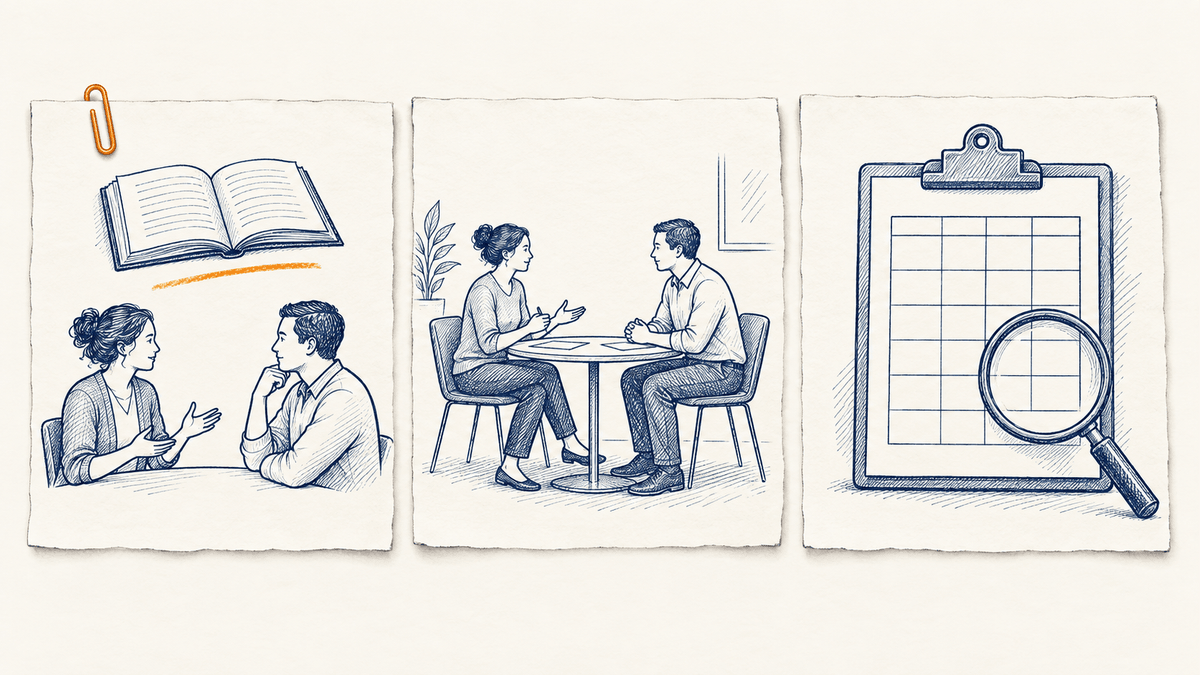
FICTIONAL PLANNING EXAMPLE
A trainer has workshop notes about running useful one-to-one conversations with new team members. A development discussion could start with one learner task: prepare for and conduct that conversation.
- Teach the task.Identify which notes and examples explain how to prepare and listen.
- Make room to practice.Discuss a scenario in which the learner rehearses the conversation.
- Decide what to look for.Ask how the learner’s questions, listening, and next-step plan could be assessed.
An invented planning example, not a SkillShiftEd customer, completed program, or promised result.
That example illustrates the relationship between teaching, practice, and assessment. It does not prescribe a particular course format or promise that a specific activity, recording, or platform is included.
Agree who checks subject accuracy, who reviews the learning activities, how feedback is resolved, and what needs approval. A general offer of development support does not establish those project-level details.
PHASE 3 · PUBLISHING PREPARATION

Prepare the material for review
The third published phase covers branding, production, project management, and preparation for partner review. SkillShiftEd’s readiness page describes such considerations as the program description, instructional files, platform materials, and claims that can be checked.
As an expert, we recommend reviewing how the proposed materials describe your subject. Look for missing context, outdated claims, unclear instructions, and outside material whose use needs permission. This applies the expert review role without assuming a particular final sign-off procedure.
- Program descriptionDoes it accurately explain the intended learner, purpose, and learning?
- Teaching and assessmentDo the instructions, examples, and checks still reflect the skill being taught?
- Claims and permissionsCan factual statements be checked, and is the proposed use of outside material covered?
“College-ready” describes preparation for review. It does not establish a universal submission standard, accreditation by SkillShiftEd, or a college’s acceptance of the program.
PHASE 4 · COLLEGE DISTRIBUTION

Understand the college’s decision
In the fourth published phase, SkillShiftEd describes submitting and distributing programs through Lovegevity’s college network. An institution controls its own requirements and decisions about review, approval, catalog placement, launch, and enrollment availability.
A prepared program and a submitted program are different from an accepted offering. Keep that distinction visible when discussing what has happened and what may happen next.

- SubmissionWho identifies suitable institutions, who submits, and what material does each institution need?
- ProgressWhat information will you receive, through which route, and from whom?
- Changes or a decisionWho handles requests for revisions, and how will a declined submission be discussed?
- After a possible launchWho handles delivery, learner questions, technical support, maintenance, and later changes?
The published process does not establish submission routing, a status portal, update intervals, a launch date, or a complete support model. Ask for project-specific answers before relying on any of them.
YOUR NEXT STEP

Start with a useful conversation
A useful first conversation starts with what you have today and what you want someone to learn. Bring a concise, non-sensitive summary and the questions that would help you decide whether to explore the work further.
The published introductory call is 25 minutes, with no cost or obligation. The Book a Call route lets you request a conversation; submitting its initial form does not itself reserve an appointment.
The program-review application is the required route for new partnership requests; it is always required for inbound interest.
BRING YOUR EXPERTISE AND QUESTIONS
Talk through what you could build.
Start with the learner, the skill, and the material you have. Use the conversation to explore fit and clarify what a possible project would involve.
Request an introductory conversation